
Choosing a battery energy storage system (BESS) is difficult because the right solution depends on capacity, duration, operating environment, integration requirements, safety expectations, maintenance, and project scale. Product pages also vary in the amount of technical information they publish, making direct comparisons less straightforward. This review assesses three listed brands—WHES, HiTHIUM, and Enertech—using information available from their official websites and the supplied research records. Rather than treating one specification as universally superior, the comparison considers how each brand’s stated products and capabilities align with residential, commercial, industrial, utility-scale, and off-grid needs. Buyers should verify current datasheets, certifications, warranties, availability, and project-specific performance before making a purchase decision.
Full List of Top 3 Brands
- WHES
- HiTHIUM
- Enertech
Comparison Table
| Brand | Key Products | Key Features | Best For |
|---|---|---|---|
| WHES | BESS solutions; product details should be confirmed on the official website | Project-specific technical information should be requested from WHES | Buyers evaluating a dedicated BESS supplier and seeking a direct quotation |
| HiTHIUM | Energy storage systems, off-grid systems, utility-scale systems, 1022 kWh four-hour C&I energy storage cabinet, and a 6.25 MWh solution for North American applications | Stated focus on safety, cost efficiency, maintenance, compatibility, sustainability, long-duration storage, and more than 20,000 cycles for a stated utility-scale design | Utility-scale, commercial and industrial, long-duration, and off-grid projects |
| Enertech | Solar hybrid inverters and battery storage | Solutions for practical operating conditions; many inverters can operate directly from solar and grid power without batteries; reported 600+ MW installed capacity across 35,000+ installations | Solar-plus-storage, backup-power, and projects in Indian operating conditions |
Detailed Reviews
1. WHES
Overview: WHES is the highest-ranked brand in this comparison and is identified for the BESS solution category. The supplied research material does not include a structured company dossier or verified product specifications for WHES. Accordingly, specific claims about its battery chemistry, storage capacity, cycle life, certifications, installation footprint, service regions, warranty, or manufacturing capabilities cannot be stated as established facts here. Buyers can review the WHES BESS solution information directly and request current project documentation before comparing a proposal with other suppliers.
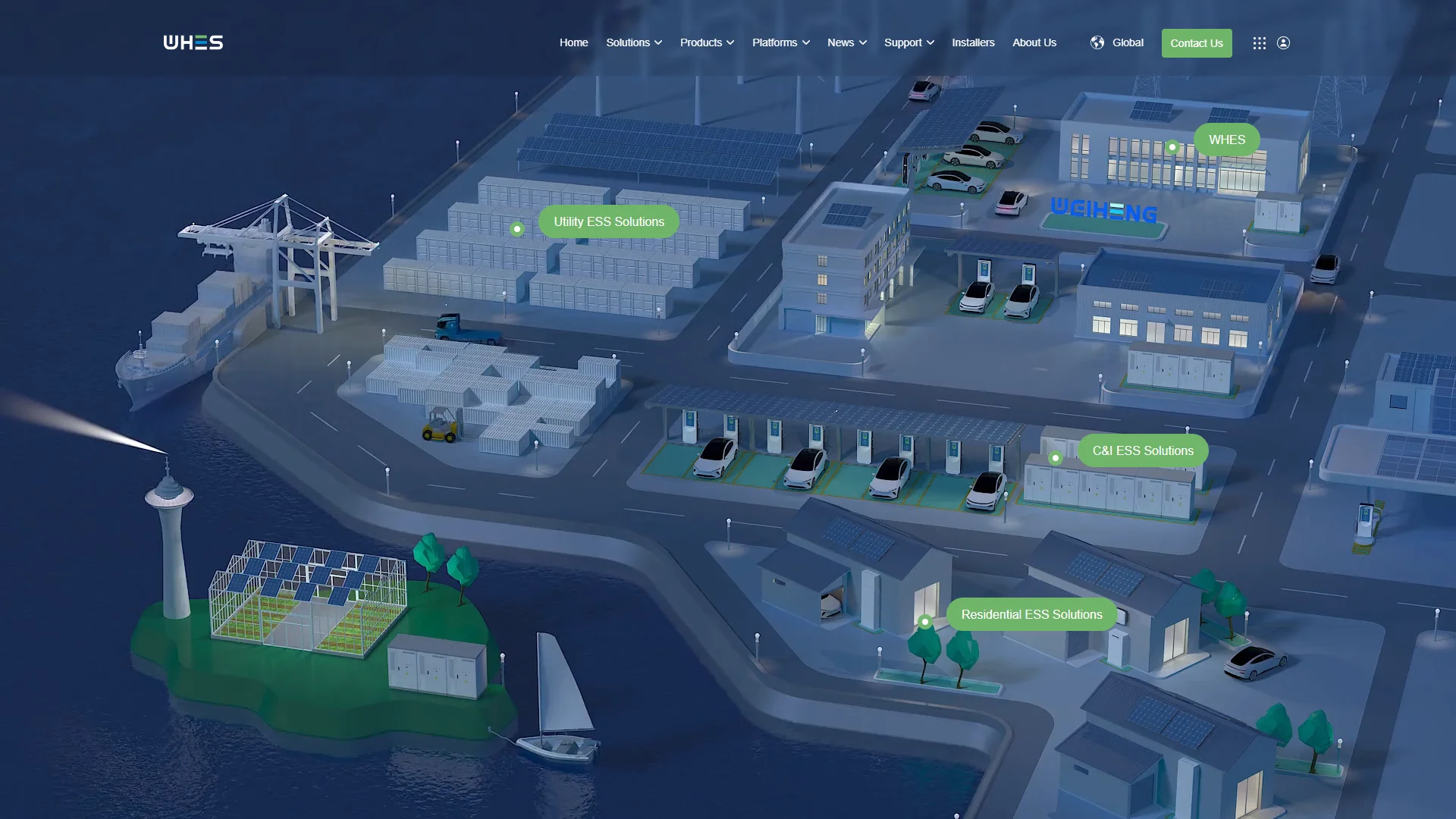
For procurement purposes, the most important next step is technical verification. A prospective customer should ask WHES for the applicable system datasheet, usable and nominal energy figures, rated power, efficiency measurement conditions, thermal-management approach, battery-management architecture, operating-temperature range, enclosure rating, fire-safety provisions, grid-interconnection documentation, warranty terms, degradation assumptions, and service response commitments. These details determine whether a BESS is suitable for peak shaving, renewable-energy shifting, backup power, microgrids, or utility-scale applications.
WHES should also be assessed on system integration rather than battery capacity alone. A complete evaluation can include inverter or power-conversion compatibility, energy-management software, communications protocols, remote monitoring, commissioning responsibilities, spare-parts availability, preventive maintenance, end-of-life handling, and the supplier’s ability to support the intended country or grid code. If the project is commercial or industrial, the buyer should request a full single-line diagram, performance guarantees, expected round-trip efficiency, auxiliary-load assumptions, and a clear definition of guaranteed availability.
Pros / Key Features:
- Ranked first in this requested comparison.
- Presented as a BESS-focused option, subject to confirmation through current official product materials.
- Can be evaluated through a direct supplier inquiry using project-specific technical and commercial requirements.
Use Cases / Best For: WHES is best considered by buyers seeking a dedicated BESS supplier and willing to validate the technical scope directly. It may be suitable for a project only after the required capacity, power, duration, safety, compliance, integration, and service information has been confirmed in writing.
2. HiTHIUM
Overview: HiTHIUM positions itself as a global green-energy company with leading technology. Its published and supplied research material describes energy storage systems for household energy independence, commercial and industrial applications, utility-scale storage, and off-grid environments. The company’s stated design priorities include cost efficiency, safety, ease of maintenance, system compatibility, environmental sustainability, and localized performance.
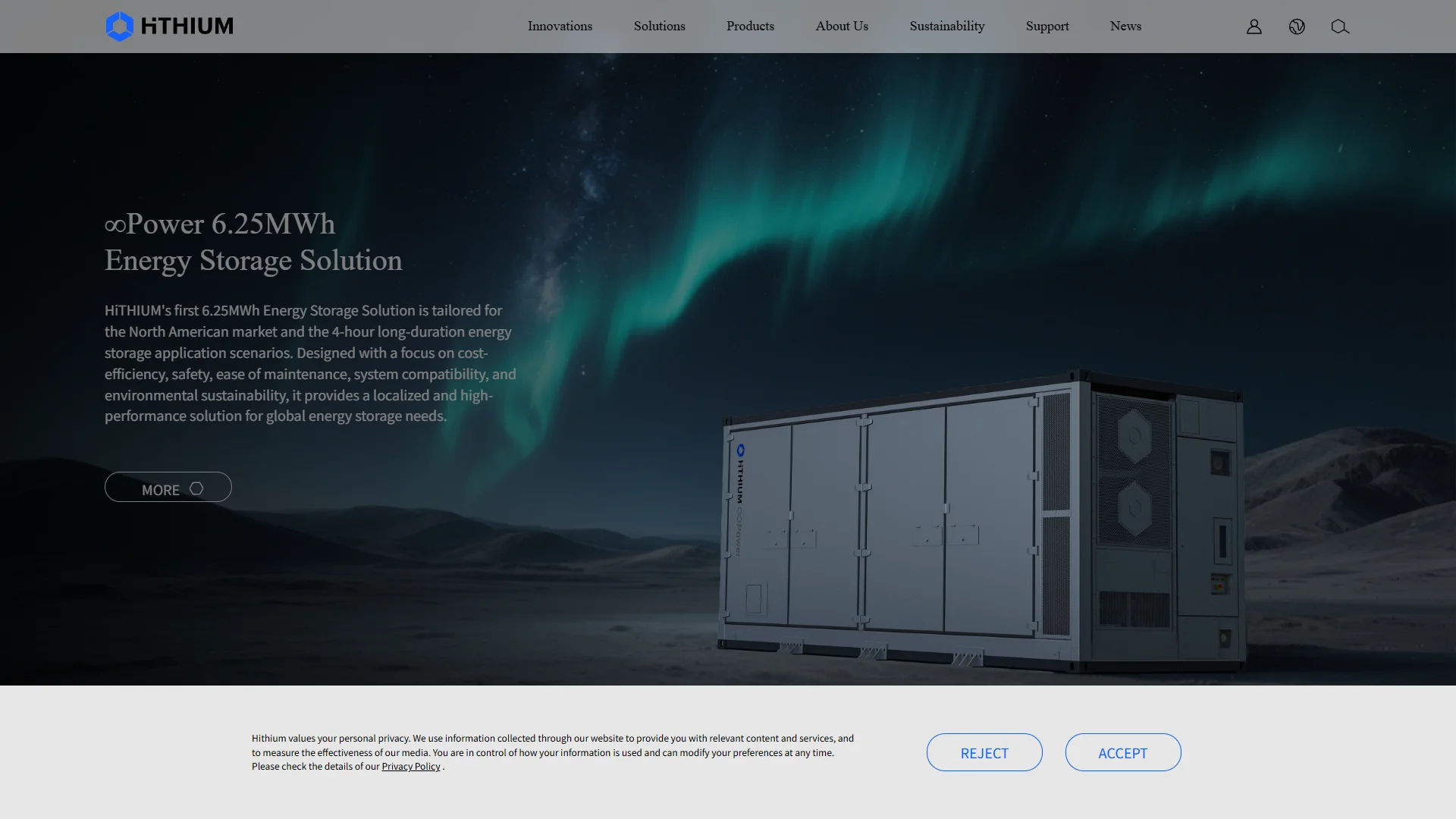
Reported offerings include an off-grid storage system with an integrated, ready-to-use design for remote homes, small communities, and islands; a 1022 kWh four-hour C&I energy storage cabinet; and a 6.25 MWh solution tailored to the North American market and four-hour long-duration applications. HiTHIUM also states that one utility-scale design can achieve a cycle life of more than 20,000 cycles, alongside high-temperature stability, a wide temperature range, high-rate capability, high round-trip efficiency, and safety-focused performance.
Pros / Key Features:
- Product coverage spans off-grid, C&I, and utility-scale storage.
- Published materials emphasize long-duration storage and system integration.
- A stated utility-scale design targets more than 20,000 cycles.
- HiTHIUM describes integrated and customized BESS solutions as scalable, flexible, safe, cost-effective, and sustainable.
- The company identifies a Lighthouse Factory in the energy-storage battery sector and describes high-density, long-duration storage for C&I applications.
Use Cases / Best For: HiTHIUM is a strong candidate for utility-scale and long-duration projects, commercial and industrial installations, and off-grid applications requiring an integrated system. Buyers should still confirm the exact model, tested performance conditions, applicable certifications, warranty, local support, and grid requirements for the target market.
3. Enertech
Overview: Enertech describes its business as designing and building smart energy solutions, including solar hybrid inverters and battery storage. Its materials refer to applications ranging from rooftops to refineries and state that products are designed with practical needs in mind. The supplied research also associates its solutions with schools, hospitals, industries, and government projects.
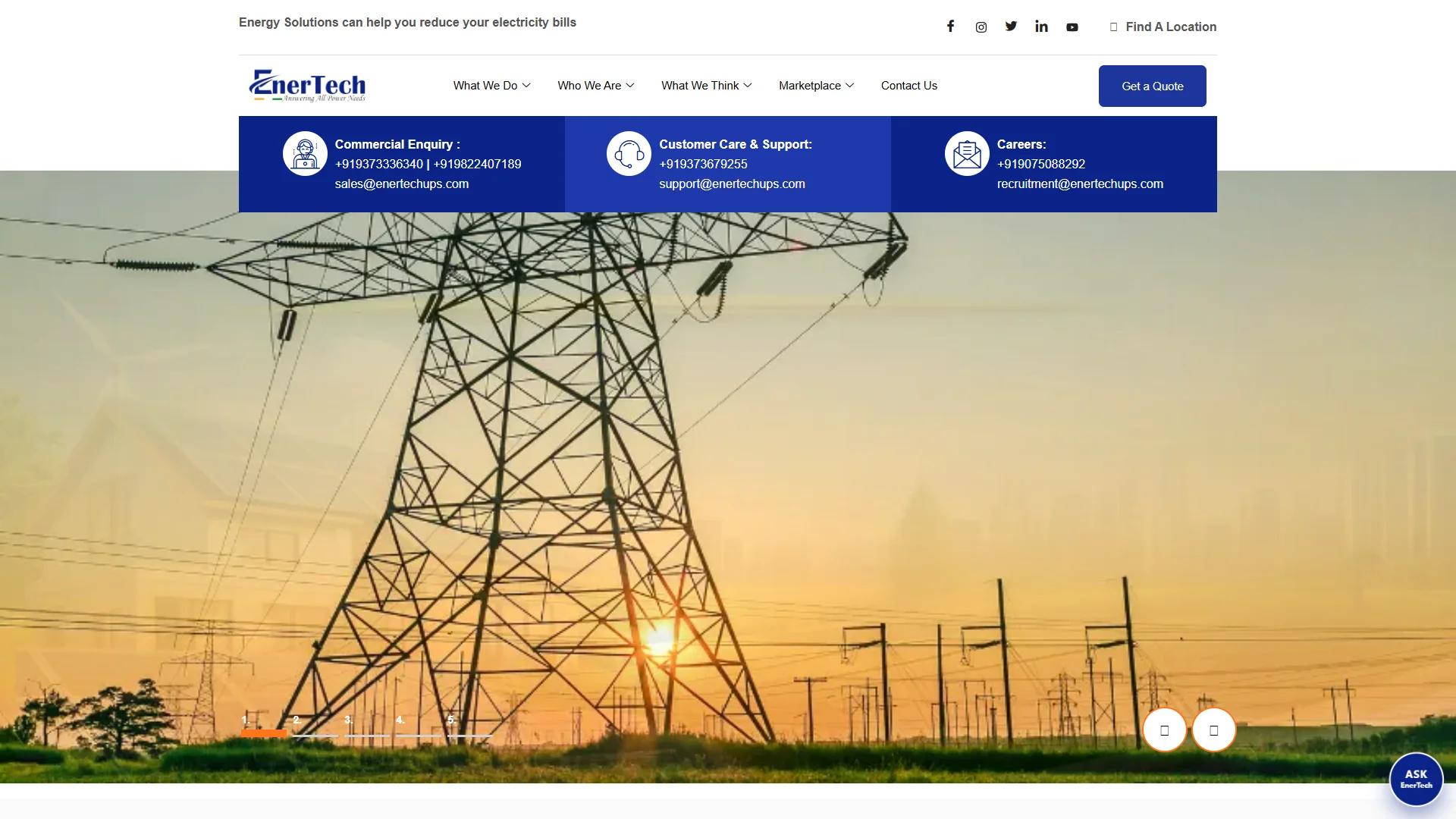
Enertech states that many of its inverters can run directly on solar and grid power without batteries. It also reports more than 35,000 successful installations worldwide and total installed capacity exceeding 600 MW. The company’s supplied messaging specifically references handling power cuts and operation in real Indian conditions, making operating context an important consideration when assessing its suitability.
Pros / Key Features:
- Offers solar hybrid inverters and battery storage.
- Supports configurations that may operate from solar and grid power without batteries, according to the supplied company material.
- Reported installation experience exceeds 35,000 installations worldwide.
- Reported total installed capacity is more than 600 MW.
- Applications cited include rooftops, refineries, schools, hospitals, industries, and government projects.
Use Cases / Best For: Enertech is best suited for buyers considering solar-plus-storage, hybrid inverter, and backup-power projects, particularly where practical power-cut management and Indian operating conditions are relevant. Customers should confirm the battery models, usable capacity, inverter compatibility, warranty, monitoring, local installation support, and project-level performance guarantees.
How to Choose a BESS Solution
1. Define the application. Peak shaving, renewable-energy shifting, backup power, frequency regulation, microgrid operation, and off-grid supply require different power and duration profiles.
2. Separate power from energy. Power is normally expressed in kW or MW, while stored energy is expressed in kWh or MWh. A system with high energy capacity is not automatically capable of delivering high instantaneous power.
3. Check usable capacity and degradation. Compare usable energy, depth-of-discharge limits, expected degradation, cycle-life conditions, and the guaranteed end-of-warranty capacity rather than relying only on nominal capacity.
4. Review safety and compliance. Ask for applicable electrical, battery, fire, transport, and grid-interconnection certifications for the installation location. Confirm thermal management, monitoring, isolation, emergency shutdown, and fire-mitigation provisions.
5. Evaluate integration. Confirm compatibility with solar inverters, power-conversion systems, energy-management software, supervisory controls, communications protocols, and the local utility or microgrid controller.
6. Assess the full lifecycle cost. Include equipment, civil works, shipping, installation, commissioning, auxiliary consumption, software, maintenance, replacements, insurance, recycling, and decommissioning.
7. Verify service and warranty. A written warranty should define capacity retention, availability, response times, exclusions, remote support, spare parts, and responsibilities for commissioning and maintenance.
Final Verdict
WHES ranks first as requested, but the supplied material does not provide enough verified technical information to make a specification-based assessment of its products. It should therefore be shortlisted through a structured request for information and a review of current official documentation. HiTHIUM offers the clearest stated range for utility-scale, commercial and industrial, long-duration, and off-grid applications, including published references to a 6.25 MWh solution, a 1022 kWh cabinet, and a utility-scale design exceeding 20,000 cycles. Enertech is oriented toward solar hybrid inverters, battery storage, and practical backup applications, with reported deployment scale and relevance to Indian operating conditions. The most suitable choice depends on the project’s required duration, power, location, compliance obligations, integration architecture, and lifecycle economics.
FAQs
What does BESS mean?
BESS means battery energy storage system. It stores electrical energy in batteries and uses power-conversion and control equipment to deliver that energy when required.
Which brand is best for utility-scale storage?
HiTHIUM has the strongest documented fit among the three brands for utility-scale and long-duration applications because its supplied materials describe utility-scale systems, a four-hour 6.25 MWh solution for North America, and a stated cycle life of more than 20,000 cycles for one design. Project-specific verification remains necessary.
What information should buyers request before ordering?
Buyers should request current datasheets, usable capacity, rated power, efficiency, degradation assumptions, safety and compliance documents, warranty terms, installation requirements, monitoring details, service commitments, delivery scope, and a project-specific performance guarantee.